
|
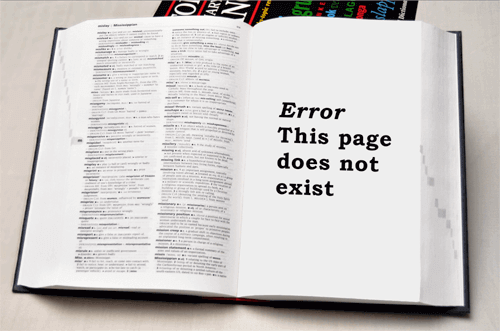
THE NEW OXFORD AMERICAN DICTIONARY Edited by Erin McKean It’s large, heavy, erudite, accessible and fairly expensive. Its Editor, Erin McKean, is, according to American newspaper reports, the hippest and sexiest lexicographer around. It’s also the first such work, so far as I know, with an electronic edition accessible on the road, since it can be downloaded to your Palm, Blackberry, or Windows mobile device. In this new edition, a press release tells me with the modesty characteristic of such documents, Erin McKean has added 2000 new terms and hundreds of new photographs, plus better layout (I resist the blurb’s readability, though it’s there on page 1409).
As always, it’s the new entries listed in the press release that provoke the most interest, if only to confirm the belief of curmudgeons that the language is well on its way to hell in a handcart, helped by permissive dictionary makers who let any old neologism into their pages. Being separated as
Of course, all the boring standard words of English are here, too. There are hundreds of usage notes, balanced and assured, without pandering either to obsessive traditionalists or anything-goes permissivists; there are lots of extended and very useful notes on groups of easily confused words, under the heading “The Right Word”. If you’re looking for a desk dictionary that covers the spectrum of American English, with a fair quantity of encyclopaedic information and illustration thrown in, you could do a lot worse. But why isn’t there a digital version for a Windows-based computer? [Erin McKean [ed], The New Oxford American Dictionary, Second Edition; published by Oxford University Press on 16 May 2005; hardback, pp2088; ISBN 0195170776; publisher’s price US$60.00.] |
Page created 11 Jun. 2005
E-Magazine
Try the weekly World Wide Words e-magazine — it features words in the news, weird words, new(ish) words, old words, words people ask questions about, and even the occasional grovelling correction.
Notes and comments
Looking for a Christmas present? Try my new book with the strange title: Why is Q Always Followed by U?
Can't tell your sinistro- from your dextro-? Help is at hand! Consult my dictionary of word beginnings and endings.
World Wide Words is supported by its readers: take a look here to see how you can help.
Try a page at random
|